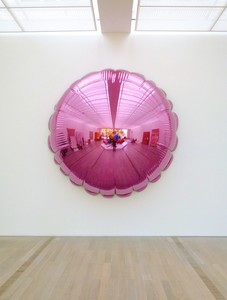
I like to think that when you leave the room, the art leaves the room. Art is about your own possibilities as a human being. It’s about your own excitement, your own potential, and what you can become. It affirms your existence.
—Jeff Koons
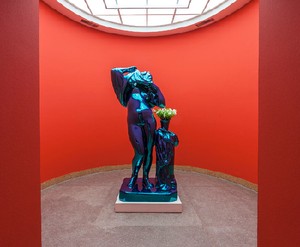
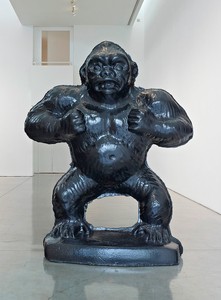
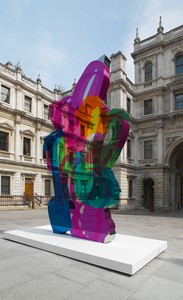
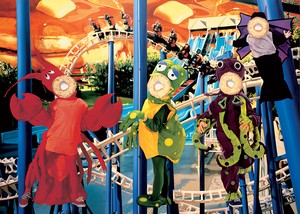
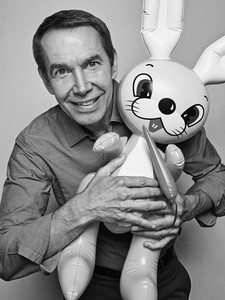
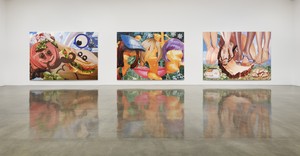
Jeff Koons rose to prominence in the mid-1980s as part of a generation of artists exploring the meaning of art and spectacle in a media-saturated era. With his stated artistic intention to “communicate with the masses,” Koons makes use of conceptual constructs—including the ancient, the everyday, and the sublime—creating luxurious icons and elaborate tableaux, which, beneath their captivating exteriors, engage the viewer in a metaphysical dialogue with cultural history.
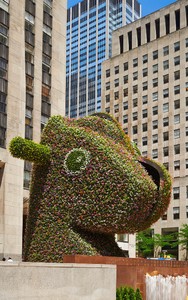
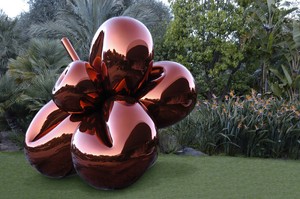
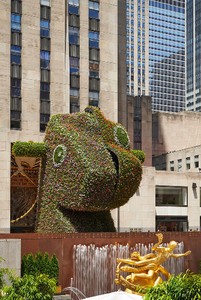
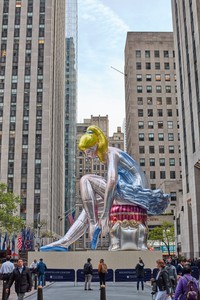
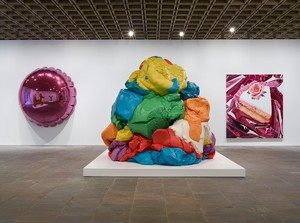
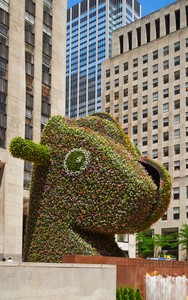
Born in York, Pennsylvania, in 1955, Koons studied at the Maryland Institute College of Art in Baltimore and the School of the Art Institute of Chicago, receiving a BFA from the former in 1976. Since his first solo exhibition in 1980, his work has evolved from small-scale assemblages of toys and found objects to his now iconic monumental works, including huge balloon animals rendered in mirror-polished stainless steel, as well as flowering topiary sculptures, such as Puppy (1992), which is permanently installed at the Guggenheim Museum Bilbao, Spain.
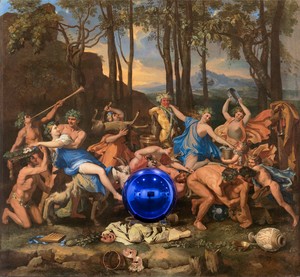
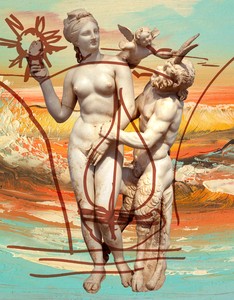
Koons draws attention to the continuity of images as they pass through time, combining art historical reference with vernacular images and objects, from common suburban products and mass media to symbols of sexuality and transcendence. Beginning with Inflatables (1978–79), a series inspired by the readymade, Koons created six series of innovative works in less than a decade including Pre-New (1979–80), The New (1980–87), Equilibrium (1983–93), Luxury & Degradation (1986), and Statuary (1986). His engagement with popular culture expanded in the Banality series (1988), which featured sculptures of recognizable figures such as Michael Jackson and Bubbles (1988)—a nearly life-size gilded porcelain statue of the pop singer with his pet chimpanzee. In 1989, Koons presented Made in Heaven (1989–91), a series centered on him and his then-wife, Ilona Staller, in sexually explicit poses, frequently in fairy-tale settings, evoking the stark bodily presence of the nudes depicted by French Realist painters.