
A Foreign Language by Catherine Lacey: Part One
The first installment of a short story by Catherine Lacey.
Fall 2025 Issue
The third installment of a short story by Catherine Lacey.
Ismail knew this story—the witch’s many proclamations, how his wife fled her country shortly after that night, how she’d left her love for Dominica forever unfulfilled—but now that Nile was listening, Tomasa was telling it differently, with more detail, as his new and questioning attention loosened old bits of memory.
And the witch told me something about why women fall in love with women—but she stopped there, remembering how she much she felt like a ghost in her life back then, in that small town that kept getting smaller.
And what was it? Nile asked, and Tomasa hesitated a moment more, looking at him as if he already knew the story and might tell it himself.
She told me it’s such a relief to finally be with someone who also knows how tragic it is to love men.
At this, Nile’s delighted laughter burst outward and upward in the café, and Ismail and Tomasa laughed too, softer, as all three of them understood this tragedy in different ways.
A young woman at the table to Tomasa’s left overheard this line—how tragic it is to love men—and immediately felt more beaten down than usual, as if she finally realized that she’d been living on the wrong end of some grand joke. Tomasa’s unplaceable accent gave this idea more weight, more truth, and it cast a sinister light on the man who was sitting next to her. The man was eating pancakes as fast as it seemed possible to eat pancakes, and all at once it was clear that he was unable to understand how hard she was working on the unsolvable problem of reaching him, of loving him, of being finally and imperfectly yet totally with him. She blinked a few times as the truth settled in, then stood slowly, smoothed the skirt of her best yellow dress, and left. The man was chewing the last bite of his pancakes, entirely unaware of the contents of his own heart. He watched her pass through the glass doors and walk steadily out of view.
As Nile contained his laughter, Ismail caught his eye for a moment, and each of them wondered what other men, what other nights in their lives (besides the two they’d shared), might have demonstrated this tragedy.
Neither Nile nor Ismail would have believed how the other had, all those years ago, felt himself to be standing outside an impossible door inside the other, not permitted to truly feel love or loved in that tent, not permitted to even ask himself whether he wanted anything more than sex in the dark with an almost total stranger. During that night and the next day and the second night, each man inferred what he could about the other, then reacted to what he thought the other wanted, and in the moments they shared a gaze in the dark, neither detected anything beyond an urgent carnality, though at the same time each man feared there was something substantial present, something larger than physical desire. Yet they each feared they were alone in that feeling, so neither suggested meeting up again in the city after the camping was done, and both of them felt, while hiking out of the woods on their own, in different directions, that it was simply impossible for him to receive a man’s love, no matter how intensely he may have felt, internally, for the other.
And now Tomasa had described the problem exactly, had transformed what felt like a private pain into a comic aphorism, a party anecdote that anyone could mention to anyone without shame—well, there it is again, that unavoidable tragedy of loving men.
Tomasa continued with her story—how she simply vanished one midnight, walked alone to the train station, leaving a note for her brother explaining that no one should come looking for her.
Nile got the sense, all at once, that Ismail had never told his wife how he’d met Nile, how Ismail had essentially saved Nile from freezing to death when his tent sprung a leak, how they’d kept warm in Ismail’s tent that night, then the next. And if their night was secret then perhaps Ismail knew nothing about the late summer weeks that Tomasa and Nile had spent together, how she misheard almost everything Nile said and was always asking him to repeat himself, something Nile found endearing at first and exhausting as the days went on.
Was it possible, Nile wondered, that this marriage had been formed as a kind of conspiracy, something meant to both exclude and include him at once? In order not to dwell on it, he kept asking questions—
But when the witch said you had to go, he asked, was that really the first time you really thought about leaving your country? The idea had never occurred to you?
Tomasa took her time to answer this question, her eyes darting upward, searching the past for the correct answer. The waiter arrived during her silence to take their empty plates, unable to decipher the charge between these three, nor the relationships present here, though this particular waiter had long prided himself on being able to read people as if they were neon signs—that simple, that clear.
The night I visited the witch, Tomasa finally said, must have been the first time it felt possible to leave, and Ismail noticed how his wife was speaking with that slow, searching pace of an old woman, the voice she might use decades into the future, the voice she’ll use as she’s trying to remember a detail from a past that perhaps hasn’t yet happened.
Yes, it was, Tomasa said at last, as if setting down something heavy. For some reason I hadn’t been able to see that far ahead, you know, and the engagement itself already felt like a permanent thing. It’s easier to say yes to an engagement than it should be, don’t you think? Even when you just give that simple answer, you’ve already passed through a portal.
When Ismail had asked Tomasa to marry him she’d also said yes urgently. Was it easy for her to accept his proposal, he wondered now, because it was the truth, or was yes simply the expected response? He felt a momentary panic over the sincerity of their years together, yet the doubt was re-engulfed just as swiftly, still present but undetectable.
When I was a child I sometimes imagined getting on one of those boats way up north in the harbor, but when it came to having a destination, of living somewhere else—I could never see it. Then the witch told me I had to leave, and it felt like a reminder of something I’d been putting off, that leaving was more important than wherever I went.
Ismail had read somewhere that the subconscious didn’t differentiate between the present and the past, that it was a crepe cake of everything you’d ever known or seen or dreamed, pressed together, and the moments he felt most in love had this quality, too—a feeling that all past and future versions of Tomasa were overlaid across her present form, silvery holograms moving out of sync.
Nile then began asking questions about Dominica—was there a particular moment she’d fallen in love with her, and did she know if Dominica loved her in return, and what else drew her to Dominica other than the power she had over Tomasa?
But Tomasa didn’t know how to answer. I never really knew what she felt. Maybe I never really knew anything about her. It was a long time ago. It was such a very long time ago.
What Nile really wanted to know, as usual, was something it wasn’t possible to know. He wanted to know what Dominica saw when she looked at Tomasa, the weight or lightness in that gaze, and did one or the other or both of the women ever imagine a life together? But it was not possible to know any of this so instead he asked Tomasa, But isn’t it always true that loving someone means accepting the possibility of being hurt, the power the other has over you?
Tomasa and Ismail each took this question in, silently, and just then the waiter happened to pass by, still vexed by why were they lingering so long, and what had held their attention so completely.
Dominica had been two years younger than Tomasa but had the withering stare and authoritative posture of someone much older. Her pale amber hair had set her apart from her many brothers and sisters, so they joked that their father wasn’t really her father, a taunt that didn’t bother Dominica, though her parents never repeated it because it was true. Aside from the dark, mean eyes she’d inherited from her mother, she looked like an uneasy hostage in that family home, a foreigner plotting her escape. Dominica refused to do the housework that her sisters were all expected to carry out, and for this her mother’s husband beat her, strategically sparing her beautiful face, a dowry someday. Dominica learned to fight back, to block strikes, to fell her false father like a tree.
All the girls avoided Dominica in the schoolyard, and when she wasn’t looking they mocked the way she held her head high and looked down her nose at the world. Yet Dominica’s stare seemed to tell Tomasa exactly where she should be—below her, forever looking upward at her flexed and muscular neck.
But the problem was not that loving someone makes you vulnerable to suffering. . . . The problem was that I loved Dominica because she could hurt me so easily. I wanted to be smaller, to be controlled. That’s what I had to unlearn.
Nile considered asking if she had unlearned it now, with Ismail, but it felt accusatory. What did he know of the complex trades of pain and love that passed within a marriage?
Yet even as Tomasa recalled the pleasurable fear she felt of Dominica, she was beginning to see how her repeated recollection had rubbed this rough and complicated memory into something artificially smooth. How long had it been? Eight, nine years—could it have been ten years already?
They paid the check for their breakfast, waved once at the analyst and her lover, and set out toward the park as if they’d planned it, passing by the fountain with the centaur where all of this had begun, and talking all the while about how anyone could ever know the true reasons they had to love anyone. Maybe reason has nothing to do with it, Ismail finally suggested, maybe love is exempt from reason.
Do you love me for no reason, then, or against all reason, Tomasa asked, playing, briefly touching his hip, then backing off, at once hesitant to perform their bond for an audience.
And were there other women like that, Nile asked. I mean back home—was it something you knew was possible?
There were two women who’d left their husbands and moved in together. Everyone said they were just close friends, but of course we all knew, Tomasa said. And the witch, of course. The witch had a wife since she was a witch. They were both witches, actually, but the main witch was the older one.
Then Ismail, unprompted, told Nile about the men in his hometown who met in the woods to camp, some of them married, some of them fathers; there was a vow of silence around those weekends, secrecy protecting all the desire and anger and tenderness between them, and sex, and sudden flares of violence. The brutality gave that parallel world its order, its rules, its pain.
And suddenly Tomasa knew, without language or a conscious thought, why they seemed unable to part from one another’s company, why Nile had been asking the questions he’d been asking, why they were walking aimlessly yet decidedly aimed toward Nile’s apartment, and if a thermometer had been held up between these three, it would have registered an atmosphere four degrees warmer than it was beyond them that winter day.
Nile lived a twenty-six-minute walk east and south of the fountain, in a neighborhood where many of those antique lampposts still stood, the ones the city had been phasing out, the ones with slightly green glass that lent the night streets a transporting patina, something from an earlier era or a different country.
Ismail bought a bag of pomelos from a street vendor simply because the old man selling them had shouted Fruit for sale with such a compacted pain that Ismail felt he had no choice, and a few minutes later the three of them stood at Nile’s door, the fruit heavy in the brown paper bag, and though their conversation had been moving steadily for the forty minutes they’d been walking since they’d left the café—as if they were three children playing a game of keeping a balloon aloft—the moment they entered Nile’s building, they seemed to have run out of things to say.
They listened to each other breathing as they ascended the three flights of stairs, then, just as Tomasa passed through the door and into Nile’s living room, he said Welcome back.
Ismail heard this and smiled, both knowing and not knowing what Nile meant. He set the bag of pomelos on the floor, and Nile shut and locked the door but made no move toward the light switches or lamps, and the three of them idled there, still in their coats. The insufficient afternoon light drifted in from the room’s small windows. No one knew what to say.
Then Nile turned away from them, lifted a metal key that hung from a long red string, and began winding a small wooden clock by the door.
You haven’t told each other, he said, about how and when we each first met.
Neither Tomasa nor Ismail replied. They listened to Nile cranking the gears.
Do you keep secrets from each other?
Secrets? Ismail asked, as if the word were new to him, as if he didn’t understand its meaning. No—not like that.
Done with the clock, Nile turned back toward them, holding his hands behind his back.
Not like what? he asked, but they had no reply to this either, so all three of them stood there full of tension, breathing shallowly.
It’s like the play about the boat, Tomasa finally said, with warmth. All that silence.
But there’s nothing to be silent about, Nile said, feeling awkward and immediately unsure of what he meant, though his tone conveyed certainty.
Later that day—after they’d finally crossed the boundary of touching each other, after they’d given their nervous urgency somewhere to go and something to do—they would all feel so far from this uneasy moment by the door that it would seem nearly impossible that a single afternoon could contain two states of mind and states of body so distinct.
But there by the door in all that tension, Nile simply reached out to help Tomasa out of her coat, and she accepted, then Ismail helped Nile out of his coat, then Tomasa helped Ismail out of his coat, each of them laughing at this little game, relieved to have broken the odd pressure, and though the entrance of Nile’s apartment featured that strange antique clock with the intricately carved boats and aquatic scenes, and an oil painting he’d won long ago in a game of cards, and an empty birdcage, and stacks of books, and several horseshoes he’d collected when he found them in the street, and a canvas bag of old keys, still—Nile had never obtained a coat rack, nor installed hooks in the wall, so they piled their coats on a small chair that was already piled with the laundry he kept meaning to take to the laundress down the street.
Shall I give you the tour?
The apartment was small and not much to tour, but it was also overfilled with things Nile had found or collected—drawings and posters and objects and plants and pinecones; he could have easily taken the rest of the day to explain it all, but instead he said very little. Here’s the bathroom. Here’s the bedroom. And the kitchen is over here.
Ismail took one of the pomelos with him as he followed Tomasa and Nile down the short hallway, noticing the unmade bed through one door, the white-tiled bathroom through another. Once they’d all stepped into the galley kitchen it became clear there wasn’t enough room to get very far from one another. Nile put the kettle on and turned back to face his guests. Ismail absently pressed his fingernails into the pomelo, and Tomasa looked over the narrow room, comparing the sight of it today to her years-old memory of it.
You painted the cabinets, she said, and Nile reached out and touched one of the doors as if to be sure.
Midnight Jade, he said, but Tomasa had already turned her attention to the part of the wall where the rotary phone was mounted, where Nile wrote numbers in pencil directly onto the plaster. There was Tomasa’s name and number, the one she no longer had.
Ismail handed the pomelo to Nile as if cued to do so and Nile began peeling it, letting the yellow rind drop to the floor, his gaze fixed on Ismail, perhaps in challenge, perhaps in surrender—it simply wasn’t clear—then he took a section of the fruit and peeled away the translucent skin so it was all just pale golden jewels clinging to each other. Ismail took a section, too, as did Tomasa, and they all ate the fruit in silence as the sharp scent of it filled the room.
Why did it seem natural, then, for Nile to reach out and touch Tomasa’s cheek, to let his thumb drift to her lower lip? At nearly the same moment Ismail put his palm flat on Nile’s chest and from there a strange velocity took over, waists in the crooks of elbows, legs between legs as they stood, grasping hipbones as if they were implements, tools of serious work, and all their mouths grazed all their necks, and their breath entangled. Eventually the kettle whistled, and Nile turned off the flame, then led them down the hall, single file, toward the bedroom, where the joining and unjoining and rejoining of their bodies went on, with items of clothing occasionally ejected from the mass of them until there was nothing between them but that narrow nothing that exists between the parts of an atom. Outside the sun found its early-winter escape, and the room grew darker, lit lightly by the greenish lamps outside Nile’s bedroom window. Everything kept going on between them, an inertia that somehow wouldn’t run out, and at times it would seem to be over as they all laid in a breathless mess, but after a few moments it would begin again, necks slicked with saliva, backs wet with sweat, and each of their mouths trying to consume something of the others.
Then it simply could not go on any longer. They were a wet ruin on the sheets, the translation of desire into action entirely spent. Each said something in their mother tongue that the others did not understand, and in fact it would be better if you imagine this entire story to have been translated from an original text rather than written from nothing. Assume crucial details have been lost in the process. Assume this always.
Each of them had cried at different points, for different reasons, in this first encounter of what would be many that winter and spring, and lying there then, Ismail cried again without entirely realizing it. A stream of tears moved steadily down each side of his face; he was overcome with a relief he could not yet name.
Nile was the first to get up, walking nakedly to the kitchen and coming back with a box of halvah, which they ate in bed, languid and flushed, slowly remembering the rest of the world.
Had it really been only three years, Tomasa wondered, since she’d last been in this room? No—she did the math—it had been almost six. How old was she? How long had she been living in this country, speaking this language? How long had she been married? They’d reached the age when ages begin to blend, the interchange between one phase of adulthood and another. There could be two extra years in your life that you hadn’t entirely noticed passing and only when it came time to account for yourself did you realize they were there, already in the past.
As Ismail was inefficiently trying to recount something about the play with the boat, Nile stood up and dressed himself, turning his attention away from the naked couple on his bed; it was only then that Ismail and Tomasa became aware of their nakedness and began searching for their clothes.
Nile wasn’t exactly being cold to them, but his warmth had receded, and the shift in temperature stung. The couple would have found it natural to kiss him goodbye, but he offered only a one-armed embrace at the door, as if they hardly knew one another. Did they hardly know each other? And was it already here so quickly? The tragedy of trying to love a man?
But I’ll see you again soon, Nile asked as they were putting their coats on again, and each of them said Yes and That would be nice, to which Nile said Please with a clear and craving tone that reassured them, that left smiles on their faces as they descended the stairs.
What was that? Ismail asked, but Tomasa could not answer, as her body was too vivid for language.
Later, as they were leaving the empty park, Ismail and Tomasa came across the redhead smoking a cigarette, but without the analyst, sitting on a bench with her knees held up to her chest. Both of them avoided an interaction, intent to get home, but she spotted them and called out—
Where’s your friend?
At home, Tomasa said, struck by something strange in the young woman’s face.
How do you know he’s at home?
Because we just left him there.
Well, she replied, sucking deeply on the cigarette, that explains it.
Are you alright? Ismail asked.
A long pause, then—No.
Do you want to talk?
It’s just that she refuses to call herself a lesbian, but she is, and she doesn’t love her husband—how could she? She just keeps saying it’s complicated, but it’s not complicated. We’re in love—it’s the least complicated thing!
Is it? Tomasa asked—an honest question.
It is!
No one said anything for a moment, then Ismail ventured that perhaps it wasn’t a problem of terminology, as language is only ever a compromise. So perhaps it’s not about the words. Perhaps it’s something else.
The redhead stared at him for a moment, then stood, nodded—Yeah, ok, maybe—and stomped away.
In their stairwell they passed the bicycle Nile had forgotten, but inside the apartment they found a mess—Molasses had clawed their bedroom curtains and pissed on the sofa, still strewn with blankets from their visitor. They’d forgotten to feed the cat, and did so immediately, apologizing as the animal hissed at them. It was only then that they realized how famished they’d become. Ismail and Tomasa found a loaf of bread in the box on the counter and they tore into it like thieves in a hurry, ripping it apart with their hands and buttering the shards.
Text © Catherine Lacey
Read A Foreign Language by Catherine Lacey: Part One and A Foreign Language by Catherine Lacey: Part Two

Catherine Lacey is the author of The Möbius Book (2025), and of five other books including Biography of X (2023). She has earned a Guggenheim Fellowship, a Whiting Award, the New York Public Library’s Young Lions Fiction Award, the Brooklyn Library Prize, and a Lambda Literary Award, and her work has been translated into a dozen languages.
The first installment of a short story by Catherine Lacey.
We present the final installment of a four-part short story by Arinze Ifeakandu.

We present the third installment of a four-part short story by Arinze Ifeakandu.
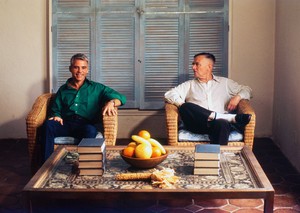
Katherine Bucknell, previously the editor of a four-volume edition of Christopher Isherwood’s diaries, has now published Christopher Isherwood Inside Out, an intimate and rigorous biography of the celebrated writer and gay cultural icon. Here she meets with Josh Zajdman to discuss the challenges and revelations of the book.
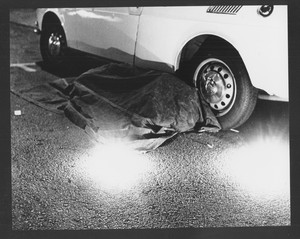
Sydney Stutterheim has published Artist, Audience, Accomplice: Ethics and Authorship in Art of the 1970s and 1980s (Duke University Press, 2024), a survey of performance art and related practices that involve, in various manners, the figure of the accomplice. To celebrate the publication, the Quarterly is publishing an excerpt that examines Chris Burden’s Deadman (1972).
We present the second installment of a four-part short story by Arinze Ifeakandu.

We present the first installment of a four-part short story by Arinze Ifeakandu. Set at the Marian Boys’ Boarding School in Nigeria, “Prosperity’s Long Song” explores the country’s political upheavals through the lens of ancient mythologies and the mystical power of poetry.
Salomé Gómez-Upegui interviews author Jennifer Higgie about her latest book The Other Side: A Journey into Women, Art and the Spirit World (2023).

The final installment of a short story by Percival Everett.

To celebrate the publication of Phaidon’s new, expansive survey, we share an excerpt from Raphael Fonseca’s introduction and a few of the more than three hundred artists featured.

The third installment of a short story by Percival Everett.

The second installment of a short story by Percival Everett.